
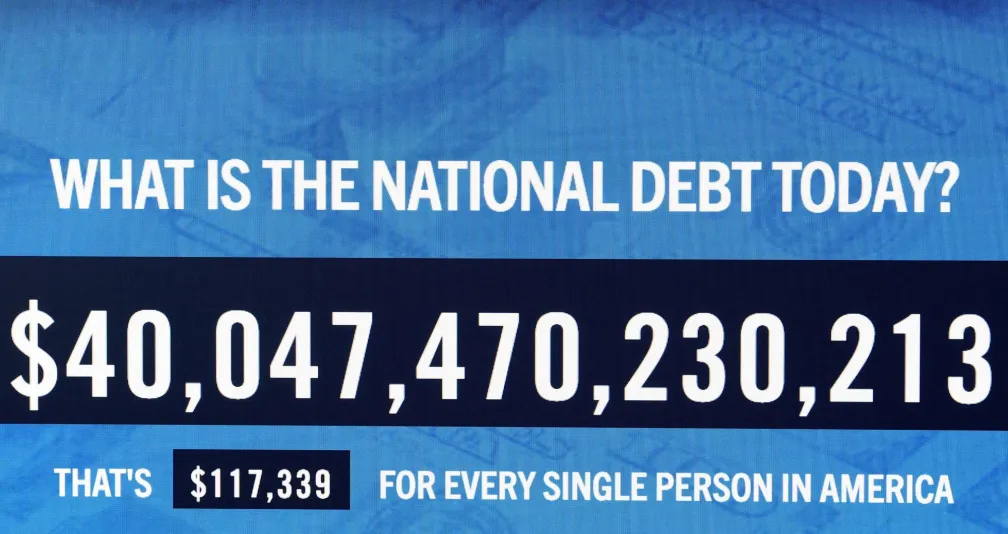
The US national debt passed $40 trillion on Wednesday for the first time, a threshold reached only five months after the total crossed $39 trillion in March. The milestone reflects how quickly federal borrowing is now accumulating as defence outlays, social programmes and the cost of servicing the debt itself all rise together.
A trillion every five months
The pace matters more than the headline number. The debt stood at $38 trillion in October, reached $39 trillion in March, and touched $40 trillion this week. It arrives as the administration juggles competing spending priorities, among them higher defence spending and the financing of the war in Iran.
White House spokesman Kush Desai said the administration is focused on cutting waste, fraud and the misuse of federal funds while accelerating economic growth, with the aim of putting the debt-to-GDP ratio on a downward path.
Why borrowers feel it
Fiscal analysts warn that the debt has stopped being a purely budgetary question. Heavier government borrowing and rising debt-service costs add pressure to market interest rates, which feeds through to what households pay on mortgages and car loans.
Michael Peterson, chief executive of the Peter G. Peterson Foundation, said it is time for lawmakers to put US public finances on a more sustainable and manageable footing.
Built up across administrations
The debt has accumulated under successive presidents while federal spending consistently ran ahead of tax revenue. The Covid-19 pandemic was among the sharpest accelerants, with heavy borrowing during President Donald Trump’s first term and under Joe Biden. Congress then approved further spending after Trump signed legislation cutting taxes and raising outlays, adding fresh strain to the fiscal position.
Budget-discipline advocates caution that continued borrowing and mounting interest payments will force the government into harder trade-offs between programmes.
The 2027 ceiling
Margaret Spellings, chief executive of the Bipartisan Policy Center, said the current debt trajectory is unsustainable and warned that additional shocks could turn the challenge into a crisis. The centre estimates the United States could reach its statutory borrowing ceiling of $41.1 trillion at some point between late winter 2027 and the middle of that summer, returning Congress to another vote on raising or suspending the limit.
This story was produced in the newsroom from the disclosed sources named above.