Doha – Qatar has firmly settled the debate surrounding natural gas exports via pipelines, rejecting them as a substitute for Liquefied Natural Gas (LNG) shipments through the Strait of Hormuz. Saad bin Sherida Al Kaabi, Minister of State for Energy Affairs and CEO of QatarEnergy, announced that the country will not utilize pipelines as an alternative transport method.
Al Kaabi expressed gratitude to neighboring countries that welcomed the idea of using their territories to lay a pipeline bypassing the strategic chokepoint. However, he clarified that the fundamental issue lies in the physical state of LNG, which cannot be transported through pipelines in its liquefied form. It must be moved as gaseous natural gas and then re-liquefied at receiving stations.
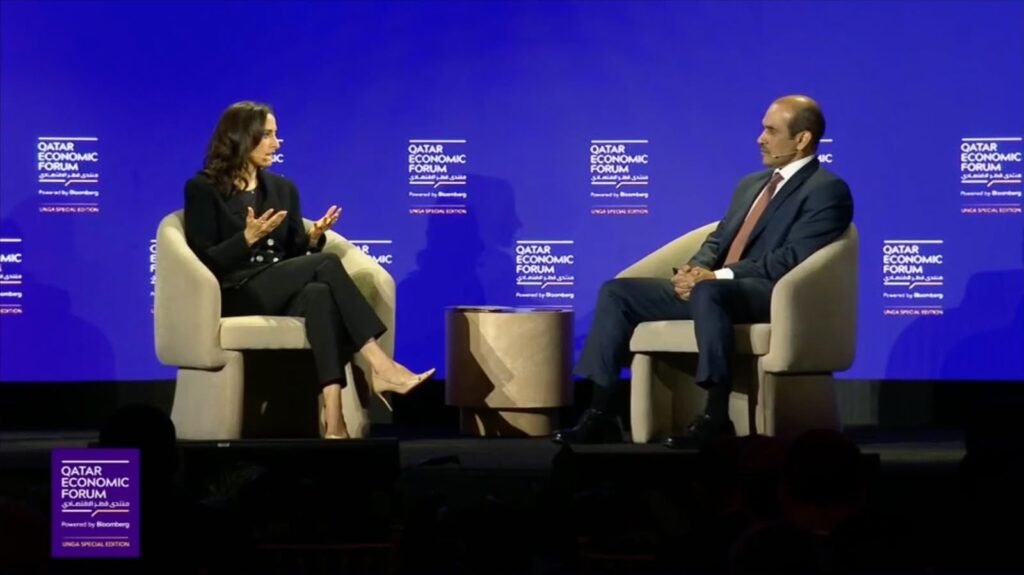
The minister made these remarks during a dialogue session titled “Reorganizing Energy in the World” at the special edition of the Qatar Economic Forum 2026 in New York. This event coincided with high-level meetings of the 81st UN General Assembly session, highlighting global energy restructuring priorities.
Economic Viability and Technical Constraints
Al Kaabi emphasized that the proposal to export Qatari gas via pipelines does not fully solve logistical problems. He stated that building such infrastructure would render facilities constructed for the North Field Expansion project redundant. Consequently, this approach lacks any economic sense or technical justification for the nation’s primary export commodity.
He stressed that Doha’s decision to avoid pipelines is based on strict commercial and technical standards. Recent proposals by Gulf research advisors suggested linking Gulf gas networks to major consumption centers in Asia and Europe to reduce reliance on the Strait of Hormuz due to navigation disruptions.
Strait of Hormuz Importance and Production Damages
The minister rejected the notion that the Strait of Hormuz holds no value. He argued it is incorrect to dismiss its importance, as Gulf waters transport all types of goods, not just oil and gas, to and from surrounding nations. He called for restoring normal movement through the strait and maintaining good relations with neighbors for future generations.
These statements come as Qatar’s LNG industry faces repercussions from damage to production facilities at Ras Laffan. Iranian attacks in March damaged two LNG processing units out of fourteen, removing approximately 17% of export capacity, equivalent to 12.8 million tons annually.
Repairing one production line will be completed in the first quarter of 2027, while fixing two LNG lines will take three years. Qatar aims to resume normal production shortly after the strait reopens, though vital equipment delays may affect expansion projects.
North Field Expansion and Trading Ambitions
Despite current challenges, QatarEnergy continues implementing the North Field Expansion plan across three stages. These projects add significant annual capacity, raising total production from 77 million tons to 142 million tons upon completion. The first new lines are expected to start in 2027, with southern expansions following in 2028.
Al Kaabi also revealed plans to enhance commercial activities by purchasing LNG from the market. He confirmed that QatarEnergy is building the world’s largest LNG trading entity, aiming to establish a dominant position in the global gas trade sector very soon.
This story was produced in the newsroom from the disclosed sources named above.