
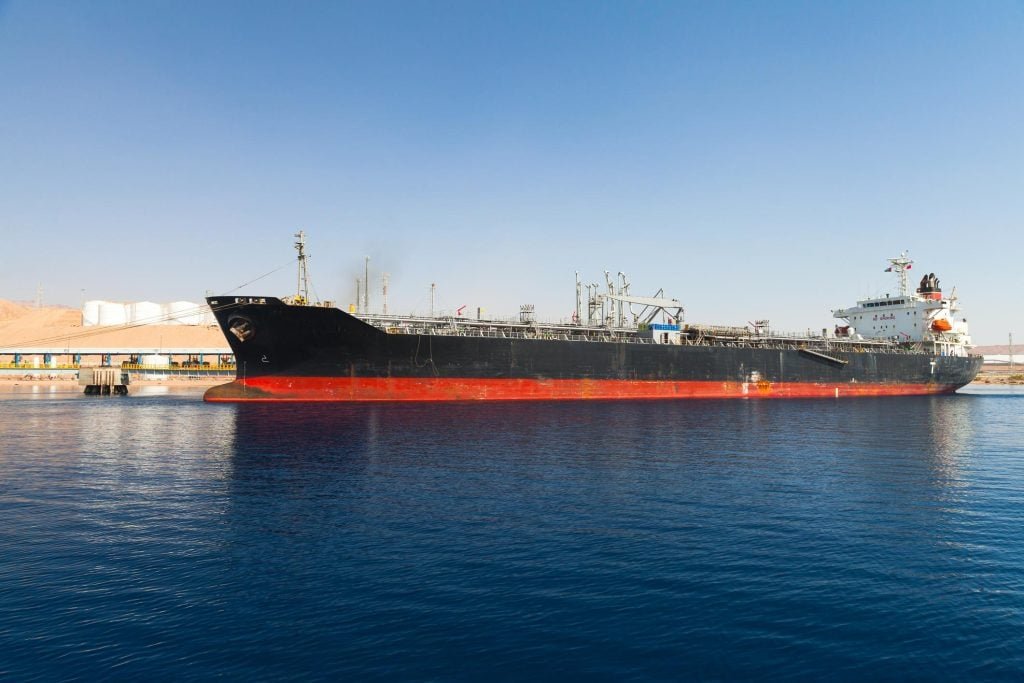
Dubai – Jordan absorbed a steep financial burden during the first seven months of 2026 after Iraq halted its crude oil exports, significantly straining the kingdom’s trade balance despite overall export growth. Official data reveals that the value of Jordan’s oil and refined product imports surged by 45.8 percent year-on-year, driven by the need to replace discounted Iraqi volumes with more expensive alternatives.
Surge in Import Bills
The cost of importing crude oil and derivatives reached 2.176 billion Jordanian dinars, equivalent to approximately 3.07 billion dollars, between January and July. This represents a substantial increase from the 1.492 billion dinars recorded during the same period last year, marking a jump of 684 million dinars or 964 million dollars. The spike occurred even as total national imports rose modestly by 2.4 percent to 11.585 billion dinars.
Shift in Supply Sources
The cessation of Iraqi shipments, which ended in December 2025, forced Amman to diversify its suppliers rapidly. During the first half of 2026, Saudi Arabia emerged as the dominant provider, averaging 75 thousand barrels per day compared to 60 thousand barrels previously. Riyadh accounted for over 83 percent of total crude and derivative imports, leveraging long-standing agreements with the Jordanian Petroleum Refinery and Aramco established since 2003.
Indian and Swedish Entries
India entered the market as the second-largest supplier, delivering an average of 13 thousand barrels daily, whereas it had supplied zero shipments during the corresponding period in 2025. Sweden also contributed minimally, providing roughly 1,415 barrels per day through a single shipment in April. Consequently, average daily imports of crude and products climbed to over 90 thousand barrels, up from 60 thousand barrels in the prior year.
Trade Deficit Contraction
Despite the heavy energy costs, Jordan’s broader trade position improved. Total exports grew by 10.3 percent to reach 6.395 billion dinars, supported by a 4.6 percent rise in domestic goods and a 67.2 percent surge in re-exports. This faster export growth helped reduce the trade deficit by 6 percent to 5.190 billion dinars, while the import coverage ratio by exports improved to 55 percent from 51 percent.
This story was produced in the newsroom from the disclosed sources named above.