
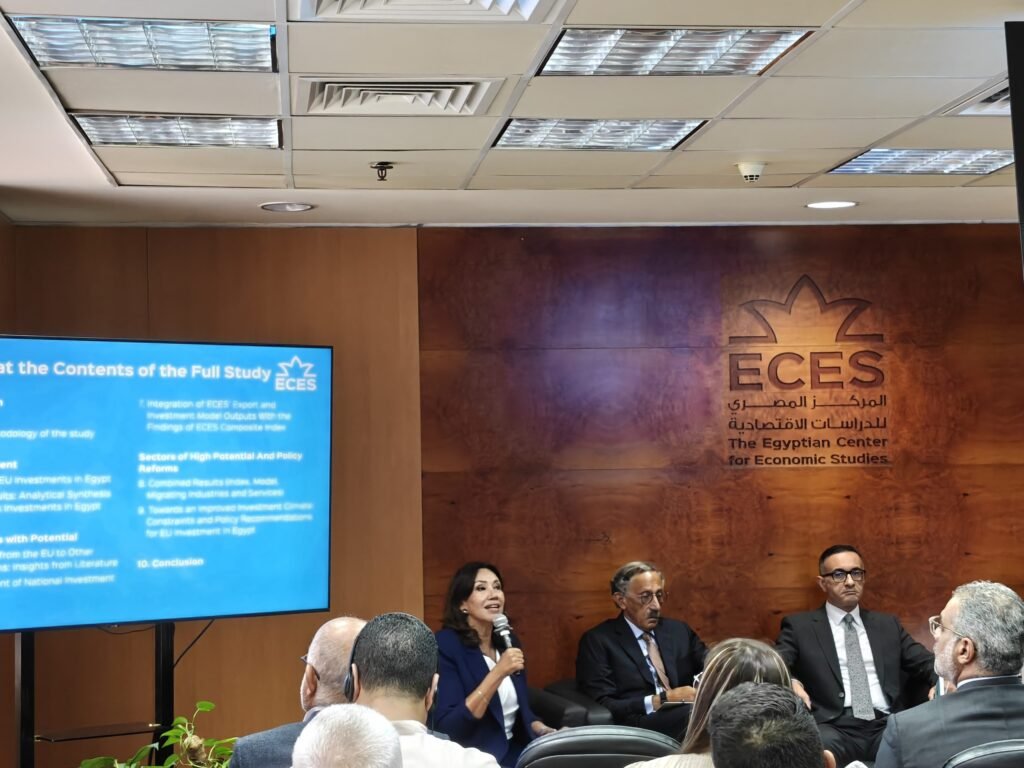
Dubai – The Egyptian Center for Economic Studies announced the results of a new study monitoring and analyzing European investments in Egypt, revealing that the stock of accumulated European investments in the Egyptian market rose to approximately 36 billion euros during 2024. This figure represents an increase from roughly 32 billion euros recorded in 2016. The study highlighted a substantial change in the composition of these funds, noting that the share of pass-through capital increased from five percent to nearly thirty percent over the same period.
Structural Shifts in Capital Composition
Osama El-Shamy, a data scientist and economist at the center, explained that the growth in investment reserves was modest, influenced by macroeconomic conditions and geopolitical shocks in the region. He emphasized the need to distinguish between actual investments and pass-through capital, which refers to companies established for specific, limited purposes such as financing a single project or managing risks. The share of this type of capital surged significantly, altering the profile of foreign direct investment entering the local market.
Recovery Following Currency Crisis
El-Shamy noted that actual investment flows were severely impacted by the foreign currency crisis, reaching negative levels during the peak of the shortage in 2022. However, recovery began in 2023 and 2024. The manufacturing sector suffered heavily, recording negative flows of 822 million euros in 2023. In contrast, the services sector demonstrated greater resilience, recovering strongly with investment flows reaching approximately two billion euros in the same year.
Sectoral Priorities and Product Analysis
The study identified high-potential sectors for attracting European investment, including automotive components, chemical industries, pharmaceuticals, textiles, energy-intensive industries, renewable energy services, agriculture, information technology, healthcare, logistics, and professional financial services. Dr. Abda Abdel Latif, executive director and head of research, stressed that identifying opportunities is insufficient without genuine European willingness to inject new capital. She highlighted the importance of encouraging small and medium-sized European enterprises to expand into the Egyptian market.
Data Methodology and Interactive Mapping
The center developed an interactive map allowing detailed analysis of investments by country, governorate, sector, and company count. For instance, French investments in Alexandria involved 21 companies compared to three Belgian firms. The study relied on Eurostat and Ministry of Investment data, noting they are complementary but not directly aggregable due to differing methodologies and geographic coverage. Dr. Rasha Saif, chief economist, explained that their model analyzed 1,068 products across five dimensions to identify priority items such as air conditioning machines, industrial furnaces, and medical drugs.
This story was produced in the newsroom from the disclosed sources named above.