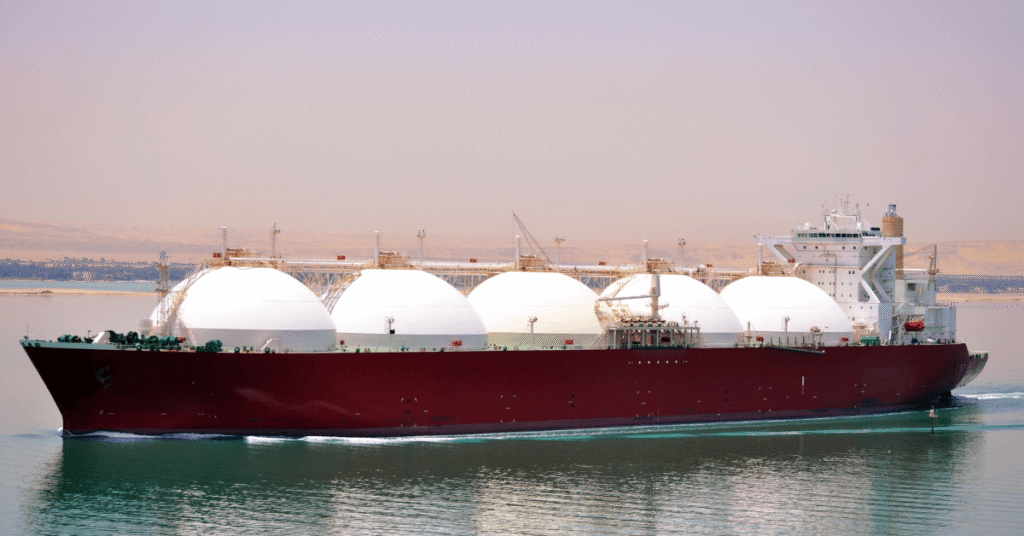
Spot charter rates for liquefied natural gas carriers have dropped to their lowest level since the start of 2026, unwinding the spike that followed the opening weeks of the Israeli-American war on Iran. As of 16 August 2026, Atlantic basin rates stood at roughly $40,000 a day and Pacific rates at about $69,000 a day, with more vessels coming available.
A correction, not a blip
Pratiksha Negi, an independent consultant specialising in the LNG market, reads the move as structural rather than temporary. She said she does not see the recent decline as a passing glitch but as a market correction driven by rising vessel supply. She also points to softer demand in Europe and Asia, and to a market that has gradually absorbed the initial shock of the war.
Pacific rates continue to trade above Atlantic ones. The gap reflects a thinner pool of prompt-delivery ships in Asia, driven by summer demand and by the diversion of Atlantic cargoes towards Asian buyers to cover interrupted Middle East supply. Atlantic loadings, meanwhile, have been held back by maintenance at the Freeport LNG and Angola LNG plants, and by the halt of a floating liquefaction project in Cameroon.
Europe enters winter behind schedule
European Union gas storage stood at 60.8 percent of capacity on 15 August, having crossed the 60 percent mark two days earlier. That is below the level recorded in any comparable period over the past five years, according to Gas Infrastructure Europe.
EU LNG imports since the start of the year total about 63.6 million tonnes, or roughly 87.7 billion cubic metres — down 4.1 percent from the 66.3 million tonnes imported in the same period of 2025. Germany, which holds the continent’s largest storage capacity at 246.5 terawatt hours (23.3 billion cubic metres), or about 22 percent of the EU total, remains just under 50 percent full and is lagging the European average.
Two paths into the fourth quarter
Negi expects conditions to shift at the end of September and into the final quarter, when European winter restocking, Asian winter demand and uncertainty over Middle East LNG supply converge. She cautioned against treating August’s slide as a bearish signal for the rest of 2026.
Her bullish case assumes continued disruption at the Strait of Hormuz, a delayed recovery in Qatari output, low European inventories and a harsh winter — leaving rates elevated and Asian pricing at a wide premium to the Atlantic, with competition for US cargoes supporting the market. The bearish case assumes a gradual reopening of the strait, a resumption of Qatari production, resilient US and non-Gulf supply and a mild winter, which would keep rates stable and below first-half levels. If restrictions on Hormuz persist, Negi said, longer voyages will support demand for LNG carriers.
This story was produced in the newsroom from the disclosed sources named above.