The pressure in global energy markets has shifted down the chain. With supply disrupted in the Middle East and Russia, the binding constraint is no longer the barrel of crude but the refinery that turns it into gasoline, diesel and jet fuel. The market for refined products is now tighter than the market for crude itself, and refineries are running hard to cover demand lost to damaged facilities and curtailed exports.
What the margin measures
The number that captures the shift is the refining margin: the gap between what a refinery’s output is worth and what its crude input cost. A plant that buys a barrel at $80 and sells the products for $95 keeps $15 before its other costs. In the United States, the 3-2-1 crack spread — which assumes three barrels of crude are turned into two of gasoline and one of diesel — cleared $70 a barrel last month, against a normal range in the low tens.
Hormuz, Russia and China
The world has lost refined product faster than it has lost crude. The war in Iran and disruption at the Strait of Hormuz have rerouted oil flows: Asian refiners have turned to Atlantic Basin barrels, while Europe has replaced Middle Eastern supply with crude from a wider set of sources.
In Russia, Ukrainian strikes on energy infrastructure have driven refinery runs to their lowest level in two decades. Moscow was one of the world’s largest diesel exporters before it imposed temporary limits on outbound shipments. China, meanwhile, has ample refining capacity but has capped fuel exports through quotas and restrictions to shore up domestic supply security — pushing other Asian refiners to lift their own run rates.
No slack left in the system
Refiners in the United States and Europe have little room to add output. Years of plant closures have left capacity thinner, and running above 90 to 95 percent of it leaves almost no operational flexibility. The result is that refiners earn heavily when product prices climb against crude costs, even when crude itself is not rising at the same pace.
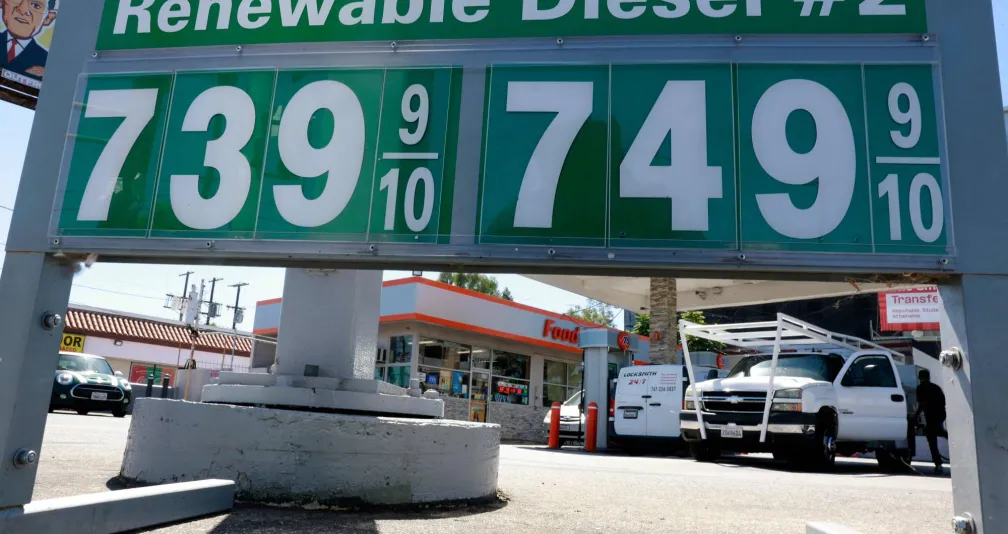
Consumers feel it quickly. The average US gasoline price has passed $7 a gallon this year, compared with about $3.16 twelve months ago.
The squeeze has further to run
Pressure on margins is likely to stay elevated in the months ahead, particularly once seasonal maintenance begins in September and takes more capacity offline. For anyone reading the energy market, watching crude prices alone no longer suffices: the refinery has become the most sensitive link in the supply chain, and product prices are climbing independently of the barrel.
This story was produced in the newsroom from the disclosed sources named above.