
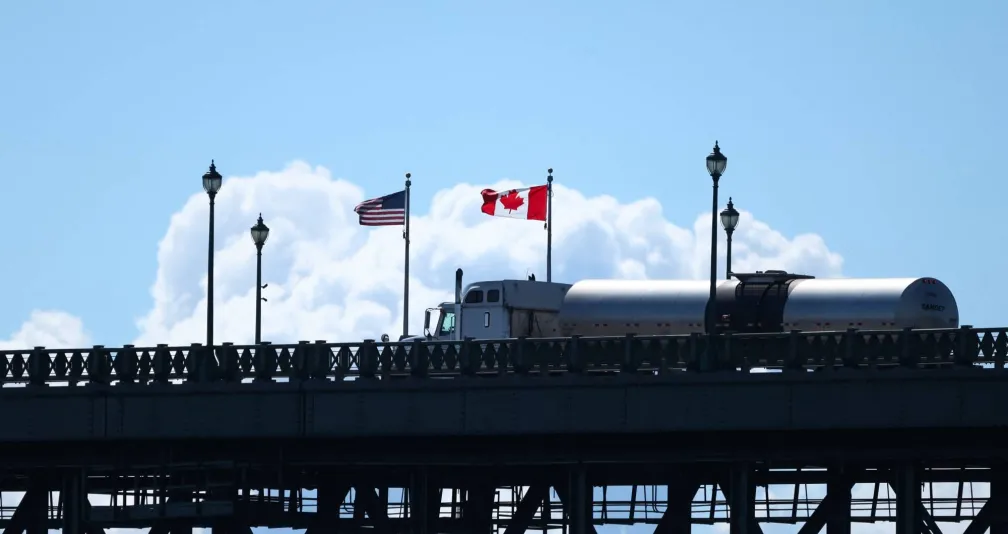
President Donald Trump suspended a new 50 percent tariff on Canadian goods for three days, hours before it was due to take effect at midnight, saying the United States and Canada had reached a deal pending the finalization of documents. The paused duties covered about $20 billion of Canadian imports, equal to 5.5 percent of Canada’s exports to the US market, and applied to goods including wine, hockey sticks and cement.
A second call in a week
The reprieve followed a phone conversation between Trump and Canadian Prime Minister Mark Carney, their second in a week, and weeks of intensive talks on revising the trade agreement between the United States, Mexico and Canada. Trump wrote on his social platform that he had halted the tariffs on the basis that the two countries had a deal subject to completing the paperwork.
About an hour later, Carney said significant progress had been made but important work remained, and that the aim was to settle outstanding trade issues and deliver greater certainty and tangible benefits for Canadian businesses, workers, farmers and families.
Autos remain the sticking point
The hardest disagreement is over automobiles. The American offer would cut the Section 232 tariff on vehicles from 25 percent to 15 percent, with further reductions tied to the share of American content in each car. Washington insists on counting US-made components only, while Ottawa is pressing for all North American content to count.
Dairy, spirits and Keystone
Canada undertook to address American complaints about its tariffs on dairy products, alcoholic beverages and wine. The Distilled Spirits Council in the United States welcomed the suspension and called for a zero-for-zero arrangement between the two countries. Trump also raised the prospect of reviving the Keystone XL pipeline, cancelled by the administration of former President Joe Biden in 2021, without saying whether it forms part of the negotiations.
What stays in force
Energy and potash were exempt from the paused tariffs, and existing sectoral duties remain: 25 percent on automobiles, along with the Section 232 measures on steel, aluminium and lumber.
Christopher Padilla, a former US Commerce Department official, said that taking negotiations down to the final hours is not unusual. Oxford Economics assessed the overall effect of the tariffs on the Canadian economy as limited, while warning that the damage to manufacturing would be heavier.
This story was produced in the newsroom from the disclosed sources named above.