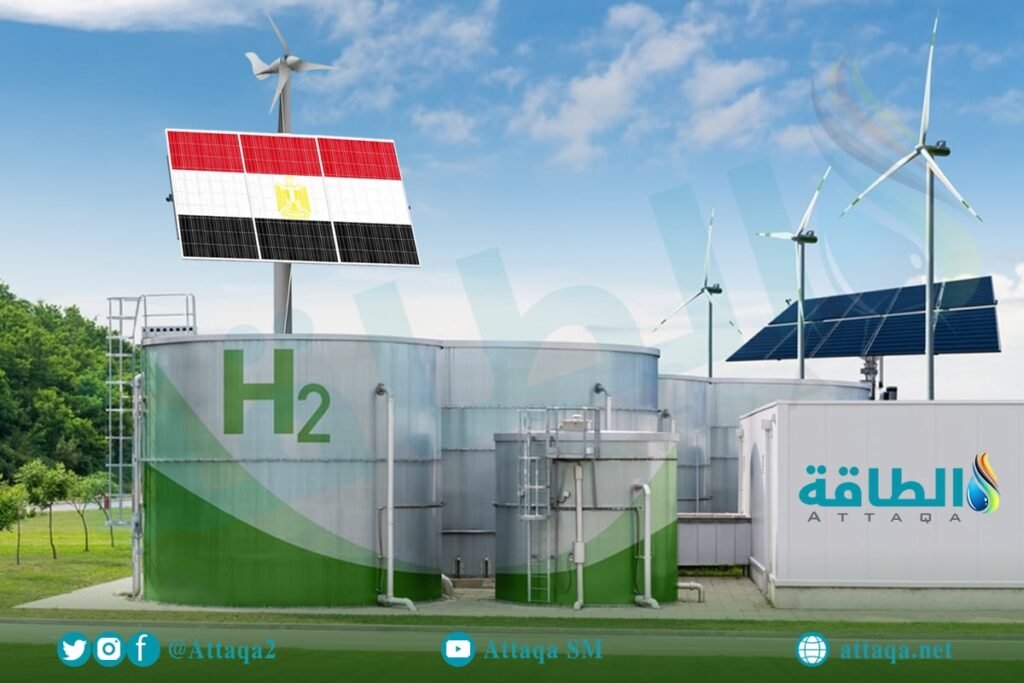
Dubai – Business News Report|| A significant number of international corporations have pulled out of green hydrogen development initiatives in Egypt, citing high production costs, insufficient long-term purchase agreements, and a slowdown in European market demand. Documents obtained by the specialized energy platform revealed that several memorandums of understanding and agreements have stalled following requests by global firms to terminate their contracts with the Egyptian government.
Official Response to Parliamentary Inquiry
The details regarding these setbacks emerged in a response from the Ministry of Electricity to a parliamentary question submitted by MP Yasser Al-Hadidy. The inquiry focused on the implementation status of economic development targets and the application of Law No. 2 of 2024 concerning incentives for green hydrogen production. The ministry attributed delays to external and internal factors, including shifting investment priorities and failure to meet contractual obligations.
Companies Terminating Agreements
The ministry identified four specific cases where companies or alliances announced their withdrawal from agreements linked to green hydrogen projects. These include Australia’s Fortescue Future Industries (FFI) and the UK-based GLOBELEQ, both of which requested the termination of their framework agreements. Denmark’s Maersk formally apologized for not continuing its project, while the Total & Enara alliance failed to submit the preliminary feasibility study within the specified deadline.
Uncompleted Implementation Procedures
A second group of entities did not complete execution procedures due to special circumstances or changed strategic priorities. This list includes Saudi Arabia’s Alfanar, China Energy, Norway’s Scatec, UAE’s AMEA Power, ReNew Power, and the TAQA–Voltalia alliance. Other participants such as Germany’s DAI and the Masdar–Infinity–HAU–BP consortium also faced hurdles in advancing to the next stages of development.
Expired Memorandums of Understanding
A third category involves expired memorandums of understanding without subsequent executive steps. Benchmark signed an MoU twelve months prior without submitting required documents, while United Energy Group took no action six months after receiving land coordinates for renewable energy projects in the pilot phase. Other names included Smart Energy, Gamma–Meridiam, SK ecoplant–CSC North Africa, Bash Global, El-Tawakkol Gila, and AMM Power.
European Market Challenges
The ministry highlighted that the primary export destination for Egypt’s first-phase hydrogen plan is Europe. However, the EU’s REPowerEU target of importing ten million tons annually by 2030 faces a gap between announced goals and actual execution. In 2024, new electrolyzer capacity additions reached only 308 megawatts, far below the six-gigawatt annual target. Only three gigawatts of the thirty-one gigawatts planned reached final investment decisions.
Cost Competitiveness Issues
Rising production costs remain a critical barrier. Unsubsidized green hydrogen in Europe costs between four and seven euros per kilogram, compared to one point five to two point five euros for grey hydrogen produced from natural gas. Higher energy, labor, and raw material prices, alongside increased global interest rates, have raised capital costs and reduced the ability of projects to secure financing without stable long-term buyer commitments.
This story was produced in the newsroom from the disclosed sources named above.