
Dubai – Business News Report|| Standard & Poor’s Ratings Services has maintained the long-term sovereign credit rating of Oman at BBB- and the short-term rating at A-3, assigning a stable outlook to the kingdom. This decision accompanies an upward revision in the agency’s economic growth projections for the current year, which now stand at 3.5 percent, significantly higher than the previous estimate of 1.6 percent.
Strategic Export Routes Enhance Economic Resilience
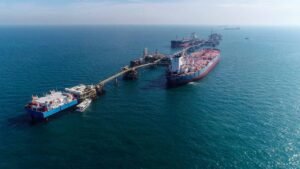
The upgrade in growth expectations is primarily attributed to increased oil and gas production volumes, alongside the continued flow of exports through alternative logistical corridors that do not rely on the Strait of Hormuz. The agency highlighted that Oman’s geographic position provides a relative advantage amidst ongoing geopolitical disturbances, as its hydrocarbon exports can reach global markets via ports with direct connections to the Arabian Sea, including Duqm, Fahal, and Salalah.
Fiscal Surplus and Strong External Positions Expected
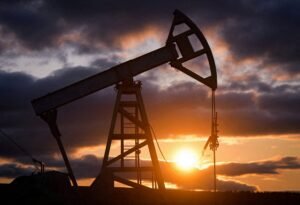
Hydrocarbons continue to play a pivotal role in the national economy, accounting for approximately 30 percent of GDP, half of goods exports, and 70 percent of government revenues. Consequently, the stability of supply chains remains a key driver for revenue enhancement and financial strengthening. S&P anticipates that Oman’s oil production will rise to roughly 1.1 million barrels per day in 2026, compared to 1.03 million in 2025, with potential increases to 1.2 million barrels daily between 2027 and 2029.
The agency projects that the general budget will shift to a surplus of 4.8 percent of GDP in 2026, assuming Brent crude averages $95 per barrel. This surplus is expected to narrow to 2.2 percent in 2027 before approaching balance in subsequent years. Furthermore, current account surpluses are forecasted to reach 3.5 percent of GDP in 2026, supported by a 35 percent increase in export flows, gradually declining to 1.8 percent by 2029.
Economic Reform Agenda and Non-Oil Sector Growth
Oman’s liquid government assets, exceeding 40 percent of GDP, and foreign exchange reserves nearing 20 percent provide substantial buffers against negative geopolitical developments. The reform agenda continues to advance under Vision 2040, with coordination between ministries improving regulatory oversight. The non-oil sector is projected to grow steadily, aided by logistics, information technology, and financial services.
Market capitalization of the Muscat Stock Exchange equals about 37 percent of GDP, while port throughput has surged, particularly at Salalah and Sohar. Despite these positive indicators, S&P warns that geopolitical risks remain elevated, with uncertainties surrounding conflict duration and their potential impact on commodity prices and credit conditions persisting through 2027.
This story was produced in the newsroom from the disclosed sources named above.