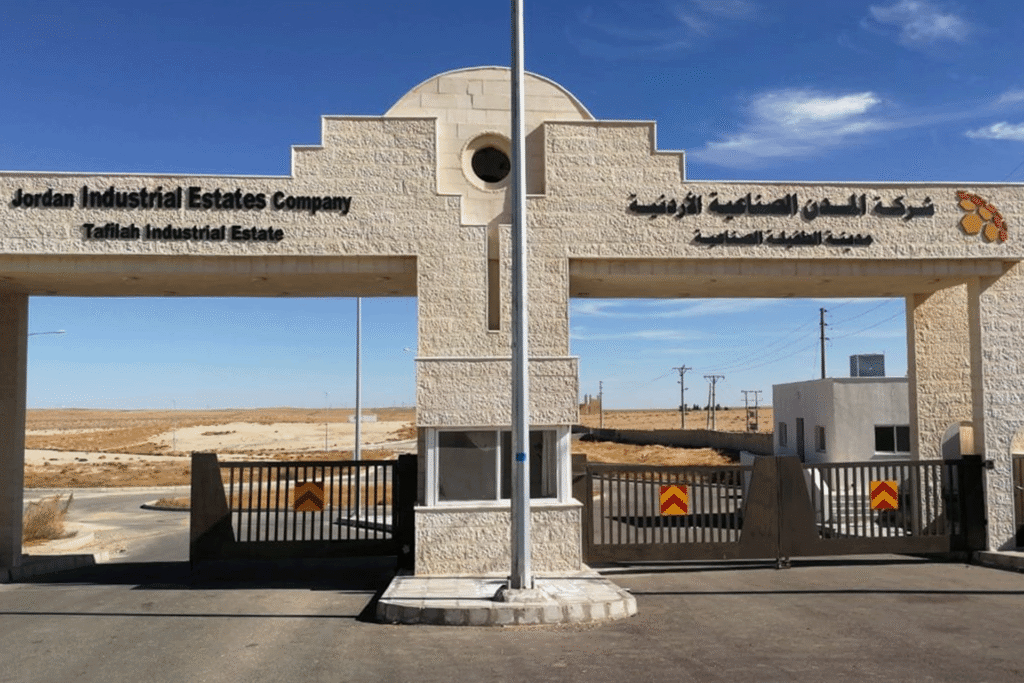
Jordan is preparing to offer Chinese investors dedicated industrial clusters inside its state-run industrial cities, a plan intended to turn King Abdullah II’s recent visit to China into factories rather than further imports. The Jordan Industrial Estates Company says the clusters would focus on electrical, electronic, engineering and metal industries, alongside technology.
Why Zarqa is the shop window
The pitch rests on two assets: industrial estates with infrastructure already in place, and a web of free-trade agreements that gives goods made in Jordan preferential access to regional and international markets. Zarqa Industrial City is being positioned as the flagship site. King Abdullah ordered work on it accelerated in May 2026, and the company classifies it as an environmentally friendly estate built for advanced manufacturing and export projects.
Zarqa is being marketed to technology, electronics, logistics, agricultural technology and pharmaceutical firms, with output aimed at markets outside Jordan. Odai Obeidat, the company’s director general, says Jordan will be presented to Chinese investors as a platform for production and export, and that the incentives on offer allow Chinese goods to be manufactured inside the kingdom and re-exported elsewhere. The company, he adds, is ready to work with Jordan’s industrial sector to unify promotional efforts. Amman is leaning on geography — a location linking Gulf, Iraqi, Levantine and North African markets — and on the port of Aqaba.
A trade gap of 14 to one
Two-way trade reached about $6.7bn in 2025. Chinese exports to Jordan accounted for $6.29bn of that; Jordanian exports to China came to $430m. The resulting deficit of $5.86bn means roughly $14.6 of Chinese goods flow into Jordan for every dollar that moves the other way. Jordan buys machinery, electrical equipment, phones, transport equipment, cars and textiles; it sells phosphates, potash, fertilisers, chemicals and metals.
Investment concentrated in power
Chinese direct investment in Jordan totalled $3.56bn between 2010 and 2025 across 71 projects, but 89 percent of that — $3.17bn — went into energy, leaving other sectors thinly served. Jordan now wants investors in manufacturing, technology and logistics: companies that transfer technology, produce locally, create jobs and lift added value and exports.
Renewable energy remains a central strand of the relationship. Its share of Jordan’s power mix has risen from under 1 percent to 27 percent, with a target of 40 percent by 2035. Chinese tourist arrivals rose 23.5 percent in the first half of 2026 to 10,967, from 8,883 a year earlier. The wider push toward Beijing is part of a strategy to diversify markets and partners while preserving ties with Washington and expanding Jordan’s presence in Europe.
This story was produced in the newsroom from the disclosed sources named above.