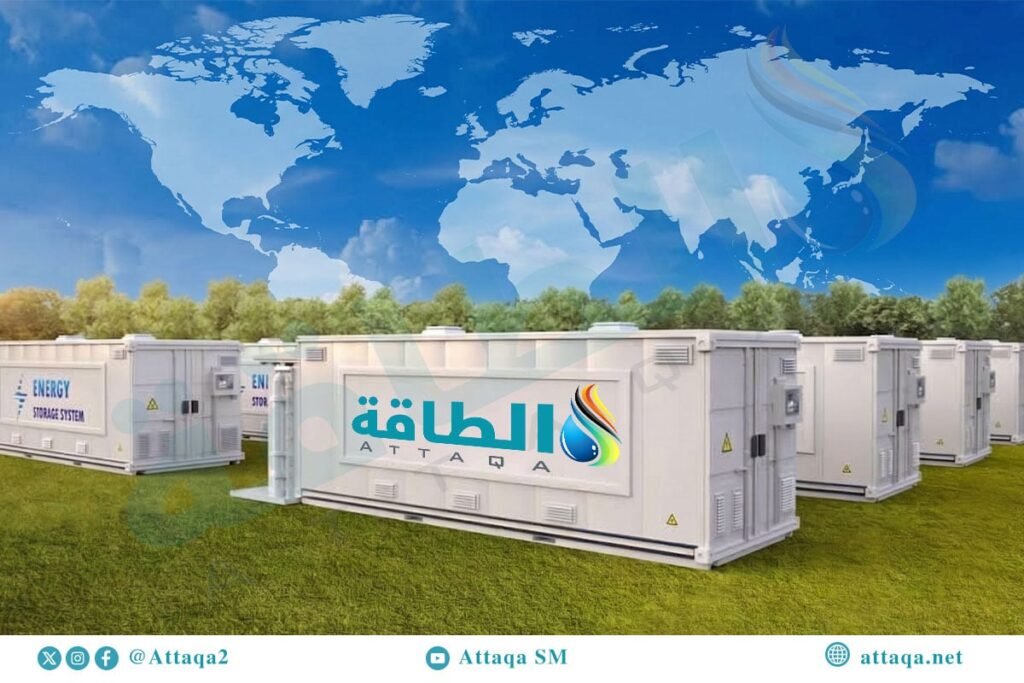
Dubai – The demand for electricity storage batteries across the Middle East and North Africa is poised for a significant surge in the coming years. This growth is primarily fueled by the rapid expansion of data centers and large-scale artificial intelligence projects throughout the region. According to a recent report reviewed by the Energy Research Unit based in Washington, these developments are creating unprecedented requirements for energy infrastructure.
Massive Power Requirements for AI Infrastructure
Announced artificial intelligence data center programs in the region currently exceed 8 gigawatts of potential information technology loads. This substantial volume of computational power necessitates tens of gigawatt-hours of storage capacity. Such capacity is essential to provide clean electricity around the clock, ensuring uninterrupted operations for high-demand digital services and advanced computing tasks.
Shift Toward Independent Data Center Models
The need for battery storage also arises from requirements for independent or semi-independent data center models relative to the grid. These facilities can combine solar and wind energy with storage and hydrogen to provide electricity during disruptions. The report outlines a gradual pathway starting with 95 to 99 percent carbon-free load coverage, using flexible backup sources before transitioning to green hydrogen for full independence.
Current Capacity and Future Projections
Operational battery storage project capacity in the region reached approximately 20.8 gigawatt-hours by August 2026, distributed across 33 projects. Planned projects indicate that by 2030, there will be approximately 84 battery storage projects with a total capacity of 128.6 gigawatt-hours. This represents a dramatic increase in regional energy storage capabilities.
Saudi Arabia Leads Regional Attraction
The report issued by D Desert Energy highlights a boom in data center development across the Middle East and North Africa. Saudi Arabia stands out particularly, ranking second globally in data center market attractiveness regarding land availability and electricity provision potential. This position supports the ability to meet major technology companies’ needs for rapid electricity access, reliable low-cost supplies, and emission reductions.
Evolving Role of Battery Technology
Traditional data centers rely on the grid as a primary power source, with storage limited to emergency durations of minutes to half an hour. While lead-acid batteries were previously used in uninterruptible power systems due to their second-level response times, artificial intelligence loads introduce complex requirements. Training large language models creates stable, schedulable loads, while inference involves rapid computational task fluctuations causing sharp demand spikes.
Integration of Computing and Grid Systems
Battery storage now functions beyond traditional backup roles to manage performance and loads. New data centers adopt a connected battery model integrating lithium-ion or solid-state batteries into computing systems for immediate stability. Operating data centers on renewable energy requires integrating electricity systems with computing infrastructure rather than keeping them separate. An ongoing Emirati project demonstrates this with 5.2 gigawatts of solar capacity and 19 gigawatt-hours of storage.
This story was produced in the newsroom from the disclosed sources named above.