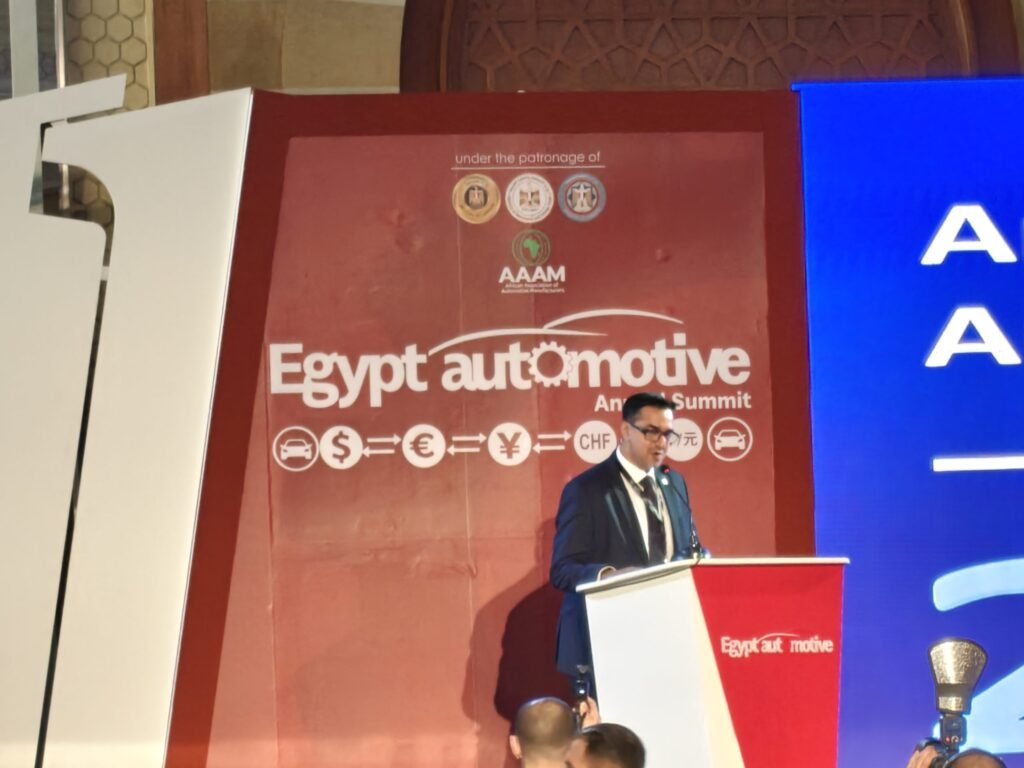
Dubai – General Motors Egypt and Africa confirmed that the company injects approximately 150 million dollars annually into local supply chains. This significant financial commitment is part of a broader strategy to support the capabilities of Egyptian suppliers.
Rohan Fernandes, Chairman and Chief Executive Officer of General Motors Egypt and Africa, stated that these investments are planned to increase substantially during the coming year. The initiative aims to qualify local entities for competition in global value chains effectively.
Market Growth and Production Statistics
Fernandes highlighted that the Egyptian market possesses a strong foundation for launching a more competitive automotive industry. He emphasized integration with the local economy to enhance Egypt’s position as an industrial gateway for African and external markets.
The executive noted that 2026 is witnessing record performance for the Egyptian car market. Sales exceeded 70 thousand units by the end of October compared to the same period last year. Projections suggest this increase could reach 100 thousand units by year-end due to continued demand growth.
Local production recorded an increase of approximately 30 thousand units. However, the share of locally manufactured cars declined by about 5 percentage points compared to imported vehicles. This trend reflects the need to strengthen policies supporting local production and achieve greater balance between manufacturing and imports.
Strategic Investment and Technology Transfer
General Motors manufactures 95 percent of the cars it sells in Egypt locally. Fernandes affirmed that local production represents the core of the company’s operations in the Egyptian market, where it has worked for four decades. The company has invested over 500 million dollars in Egypt since its presence began.
Additionally, more than 50 million dollars were injected over the past decade to develop industrial robots, safety systems, and update manufacturing technologies. Fernandes stressed that the future of the automotive industry in Egypt depends on deepening local manufacturing and developing supplier capacities.
Focus areas include advanced components such as automotive software, electrical engineering, battery systems, and precision engineering. These technologies form the future of the global mobility sector. Localization should not be limited to meeting local content ratios but must rely on technology ownership and productivity gains.
Policy Recommendations for Industrial Stability
Fernandes called for a clearer and more stable investment environment ensuring long-term planning capabilities. He urged continuing the National Program for Automotive Industry Development (AIDP) and adopting policies achieving competitive balance between imported and locally made cars.
He emphasized developing an integrated export-supporting system by activating local demand for cars made in Egypt. Increasing production capacity and providing competitive export incentives are crucial alongside stabilizing the market environment.
Building a strong automotive industry system is a shared responsibility among the government, car manufacturers, local suppliers, and academic institutions. This collaboration ensures technology transfer, investment injection, and development of qualified engineering and technical cadres.
The ultimate goal is enhancing the competitiveness of the Egyptian product in global markets. Fernandes concluded that achieving this requires sustained cooperation and strategic alignment across all stakeholders in the automotive ecosystem to secure long-term industrial growth.
This story was produced in the newsroom from the disclosed sources named above.