Major Financing Approval for Egyptian Energy Transition
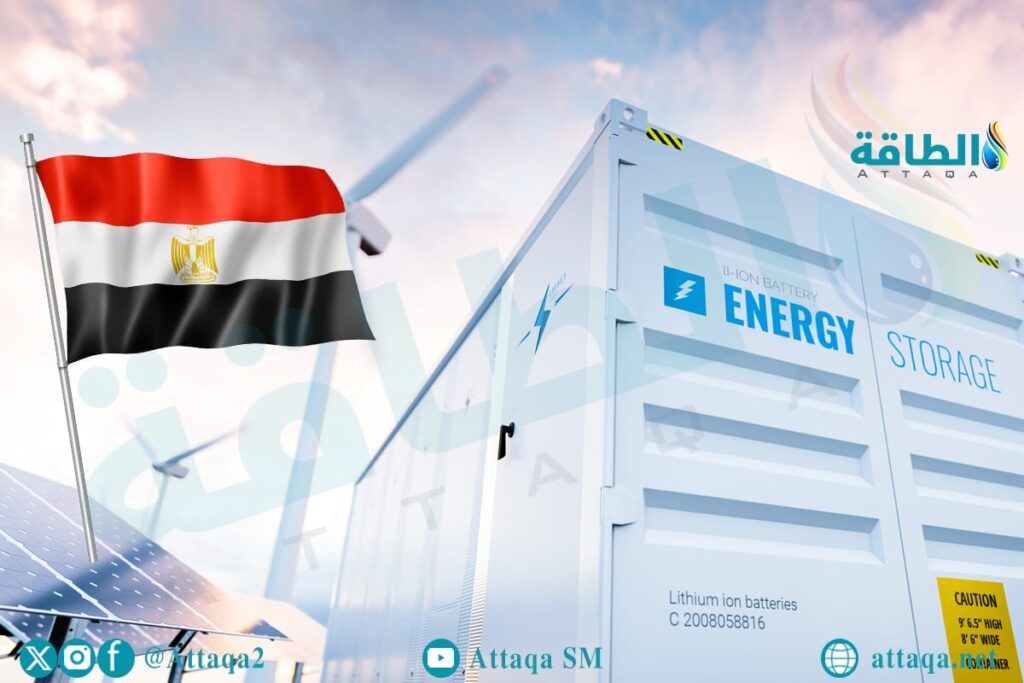
The European Investment Bank (EIB) announced on Thursday, August 27, that its Board of Directors has approved a new financing package valued at 9.2 billion euros, equivalent to approximately 10.5 billion dollars. This approval is designed to enhance competitiveness, accelerate the transition within the energy sector, and strengthen partnerships with countries outside the European Union. While the specific allocation for Egypt was not disclosed by the bank, the inclusion of solar energy and battery storage projects in the approved list confirms continued European interest in developing Egypt’s energy sector.
This financial support aligns with Egypt’s strategic objectives to increase the share of clean energy to 45% by 2028 and more than 42% by 2030, with a long-term target of 65% by 2040. The expansion of electricity storage capacity is critical for balancing renewable generation with grid demand as the country transitions from studying storage technologies to implementing large-scale commercial projects.
Key Energy Storage Projects Under Development
Egypt has witnessed rapid advancements in its electricity storage sector over recent years. In June 2025, the first commercial project came into service in Aswan. Developed by UAE-based AMEA Power, this facility features a storage capacity of 300 megawatt-hours, integrated with the 500-megawatt Abidos Solar Power Plant, marking it as the first project of its kind in North Africa.
Furthermore, the Ministry of Electricity and Renewable Energy signed an agreement with AMEA Power to establish new storage projects with a total capacity of 1,500 megawatt-hours, distributed between the Benban and Zaafarana regions. Concurrently, the Obelisk project in Nag Hammadi stands out as one of Africa’s largest solar-plus-storage initiatives. With a total capacity of approximately 1.1 gigawatts of solar power and a 200-megawatt-hour battery system, the first phase was commissioned in February 2026, providing 561 megawatts of solar power and a 100-megawatt storage system. The second phase aims to add another 564 megawatts of solar capacity. The total cost of the Obelisk project is estimated at 590 million dollars, with the EIB contributing 150 million dollars to its financing.
Another major initiative is the Nefertiti Battery project located within the Benban Solar Park in Aswan. Targeting a storage volume of approximately 1,000 megawatt-hours, it ranks among the largest independent battery storage projects in Africa. The project is designed to store excess solar energy during peak production hours and inject it back into the grid when needed, thereby reducing production fluctuations and improving the efficiency of renewable energy utilization.
Broader Strategic Context and Regional Impact
Official data from June 2026 indicates that several large-scale solar and wind projects are under development, alongside battery storage capacities reaching approximately 7,000 megawatt-hours. Many of these projects are targeted for grid connection in 2027 and 2028. Egypt aims to reach a total electricity battery storage capacity of roughly 14.32 gigawatt-hours by 2028.
The EIB’s new financing package extends beyond Egypt. The majority of the funds, totaling 4.3 billion euros, were directed toward projects within the EU, supporting small and medium-sized enterprises in Croatia, the Czech Republic, France, Greece, Italy, Poland, Romania, Slovakia, and Spain, particularly in security, defense, space, energy, and agriculture sectors. Infrastructure investments include electricity grids in Germany and Greece, solar projects in Italy, central heating infrastructure in Lithuania, and a railway link between Croatia and Hungary.
Outside Europe, the package includes financing for electricity grids in Brazil, agricultural support in Kenya, Rwanda, Tanzania, and Uganda, and medical equipment in Kosovo. These investments are part of the EU’s Global Gateway strategy, which aims to foster sustainable economic partnerships and support infrastructure and clean energy in emerging markets. The continued international funding is expected to accelerate the addition of new capacities and enhance the grid’s ability to absorb renewable energy generated in Egypt.
This story was produced in the newsroom from the disclosed sources named above.