Dubai – Business News Report || Egypt’s deepening economic crisis has fundamentally altered consumption habits across social strata, pushing upper-middle-class families away from premium international brands toward second-hand clothing markets. This shift reflects a broader struggle against inflation and declining purchasing power that now affects households previously insulated from such pressures.
Mothers attending expensive private schools in Cairo have formed online groups to exchange used school uniforms between different grade levels. This practice allows families to save significant costs at the start of each academic year, replacing the purchase of new attire with the swapping of gently worn items among peers.
The impact of financial strain is no longer limited to low-income groups. Affluent families who once maintained high spending levels are now adopting unconventional measures to reduce expenses. Even daily life details, previously non-negotiable, are subject to cost-cutting strategies as inflation erodes disposable income.
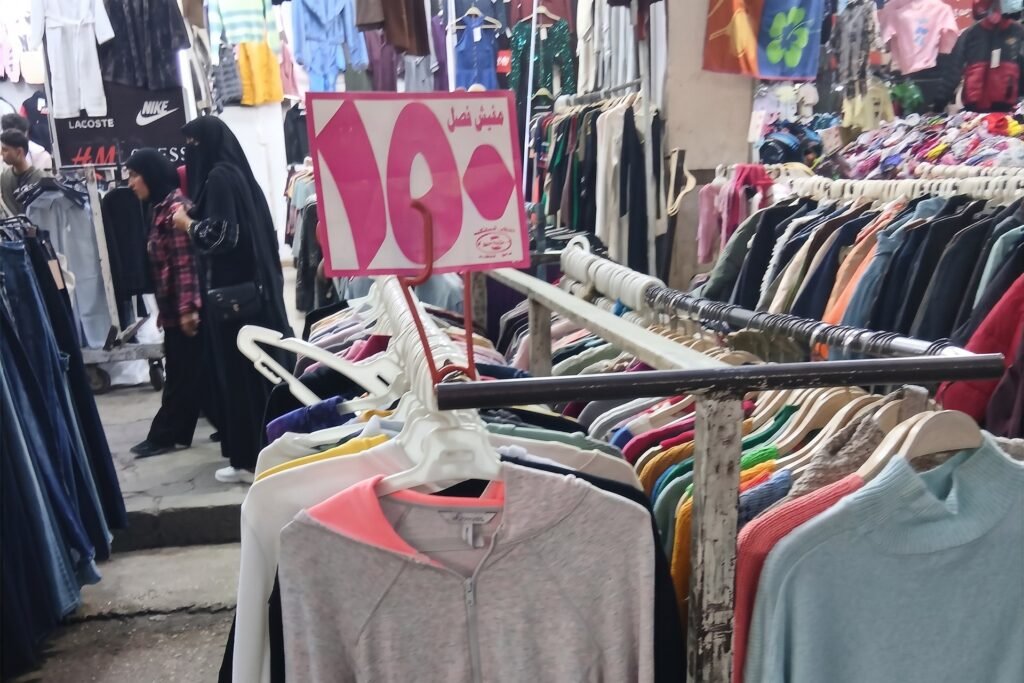
In upscale districts like Dokki in Giza, shoppers are seen crowding large bins labeled “clothes by the kilo.” Among them is Mohamed Ibrahim, a bank employee who previously purchased clothes for his family from well-known brands like Zara. He now shops at these bulk stores to find winter wear for his children, citing substantial savings without compromising on quality.
Ibrahim noted that while he initially resisted the idea, colleagues convinced him to try second-hand options. He discovered that the difference between new branded items and second-hand goods lies primarily in price rather than condition. His family has since become regular customers, monitoring store social media pages for new shipments.
This trend marks a geographic expansion for the second-hand trade. Historically confined to traditional markets in central Cairo, these shops have spread to wealthy areas such as Nasr City, Sixth of October City, and Maadi. Specialized stores selling by weight now attract demographics that never previously visited such venues.
Store owners report that demand is driven by citizens seeking affordable alternatives. The variety of stock makes these shops destinations for diverse needs. The pricing model appeals to families wanting multiple items at minimal cost, transforming the retail landscape significantly.
Traditional retailers are also adapting. Abdul Rahman, a vendor with over forty years of experience in the Ezbet area, entered the second-hand market after losing customers unable to afford new garments. He observes that his clientele now includes residents from affluent neighborhoods like Heliopolis and New Cairo.
Data indicates a surge in imported used clothing, with volumes increasing by ten thousand tons. This influx supports the growing supply available to consumers. The phenomenon underscores how economic hardship is reshaping not just budgets, but entire cultural approaches to fashion and consumption in Egypt.
This story was produced in the newsroom from the disclosed sources named above.